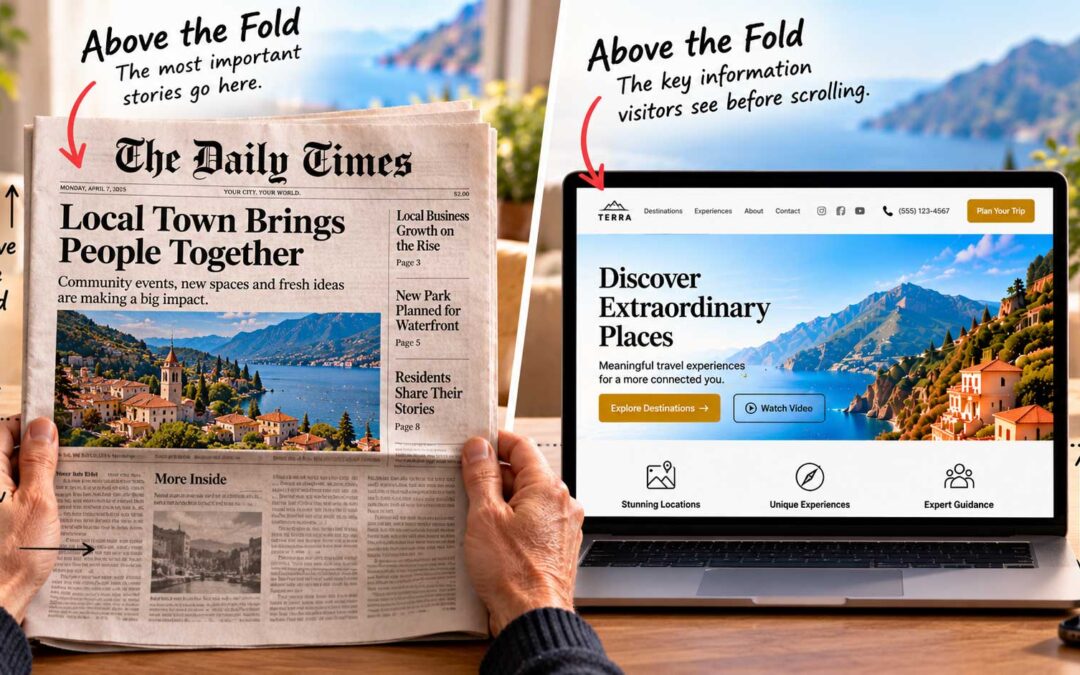
We’ve now covered the building blocks: what goes above the fold, how people read, and how to size text and choose colors. The next question is how to apply them to your homepage. And that depends on what kind of website you’re building.
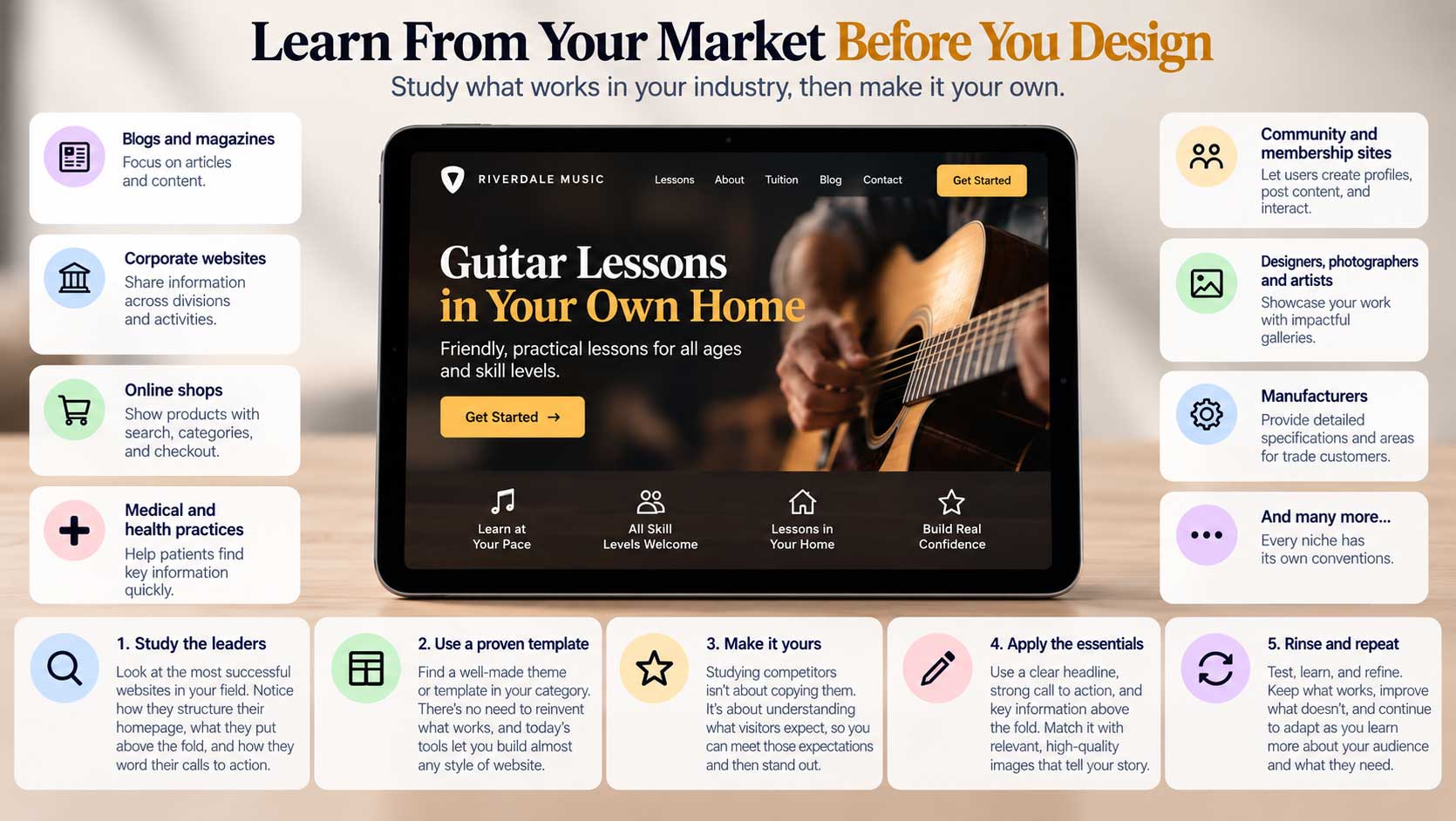
Every category has its own needs. There are an almost endless number of website categories, and each one has its own conventions. A few examples:
- Blogs and magazines focus on articles and content. Magazine-style layouts with clear headlines and article cards work well.
- Corporate websites are often the hub for many divisions and activities, with a news section for updates.
- Online shops focus on products, with search, categories, and an integrated checkout.
- Medical and health practices such as dentists, doctors, therapists, and pharmacies need to organize a lot of information so patients can find it within a few clicks.
- Community and membership sites let users create profiles, post content, and interact with each other.
- Designers, photographers, and artists often choose full-screen layouts to show off their work.
- Manufacturers usually need detailed product specifications and areas for trade and wholesale customers.
Each of these breaks down further into countless niches. A wedding photographer and a real-estate photographer may both need galleries, but their visitors are looking for very different things.
Study the leaders in your field. It’s easy to see how the leading websites in any market are designed. Look at your most successful competitors and note what they have in common. How do they structure their homepage? What do they put above the fold? How do they word their calls to action? Spotting these patterns gives you a starting point built on what already works.
Then look for a well-made website theme or template in your category to build on. There’s no need to reinvent what works. With today’s website tools, you can build almost any style of website, at reasonable cost.
Then make it yours. Studying competitors isn’t about copying them. It’s about understanding what your visitors already expect, so you can meet those expectations and then stand out.
Rinse and repeat. Take who, what, where, why, and how, and frame them with a dynamic headline, a strong call to action, and clear information. Place them in plain sight above the fold. Then put your graphic design skills to work, integrating beautiful, relevant images that tell your story. Imagine a guitar lesson website: a dramatic photo of a guitar, a bold headline offering lessons in your own home, a short supporting line, and a single “Get started” button. Simple, clear, and effective.