Selling physical products online comes with plenty of challenges. Unless you already have an established business, you’ll face inventory, warehousing, shipping, returns, and accounting, to name just a few. Even if you use a drop shipping supplier to handle stock and delivery, there are real costs and complications.
But not everything sold online needs a warehouse. Thousands of websites sell only digital products, and many of them do very well. There’s no shipping, sales can be delivered instantly, and the main ongoing expense is marketing.
Popular digital products include:
- Ebooks and guides
- Photography and stock images
- Software, apps, website themes, and plugins
- Graphics, illustrations, and templates
- Online courses, tutorials, and lessons
- Videos and music
How is the design different? A furniture store needs to show textures, sizes, and room settings. A digital product site has a different job: helping people search and preview quickly, then download with as little friction as possible.
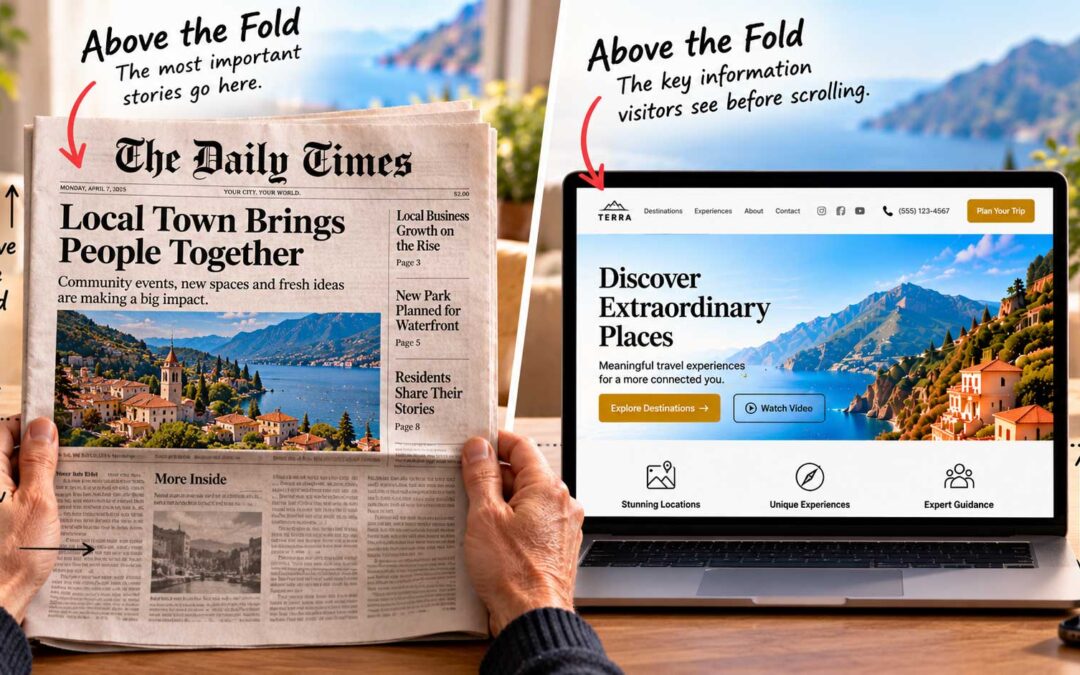
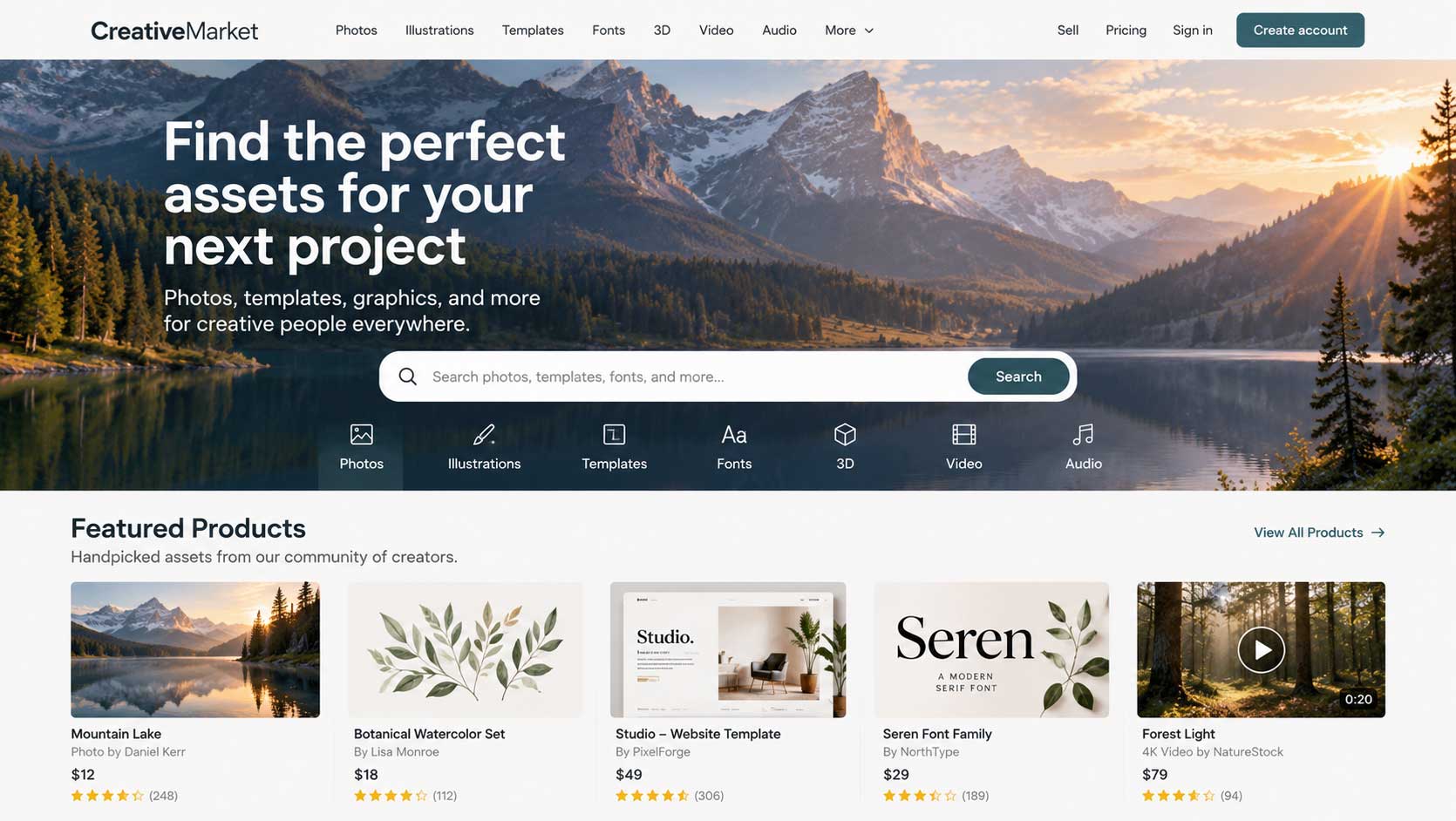
Search comes first. Stock image libraries like Shutterstock are a good example. Their homepages are built around a large, prominent search bar placed right above the fold, usually over an eye-catching image. Category links for photos, vectors, video, and music sit close by, so visitors can start browsing immediately. Everything you need to begin your search is right there, without scrolling.
The same pattern, again and again. Marketplaces for website themes and templates follow the same approach: a short headline stating what’s available, a search box, a few quick filters, and featured products just below. Look at top digital product websites and you’ll see the above-the-fold principle show up over and over.
Design tips for digital product sites:
- Make search impossible to miss, with helpful suggestions as people type.
- Offer previews: sample pages, demo videos, watermarked images, or free trials.
- State clearly what the buyer gets, in what format, and how they’ll receive it.
- Keep checkout short, and deliver the product instantly after payment.
- Use reviews and download counts to build trust.
The principles of good web design don’t change with the product. Understand what your visitor came for, put it front and center, and make the next step effortless.