Some years ago, we worked with a client whose website was in good shape. It was well optimized for search, with solid, useful text on the homepage. Then their sales slowed, and they hired a new sales executive.
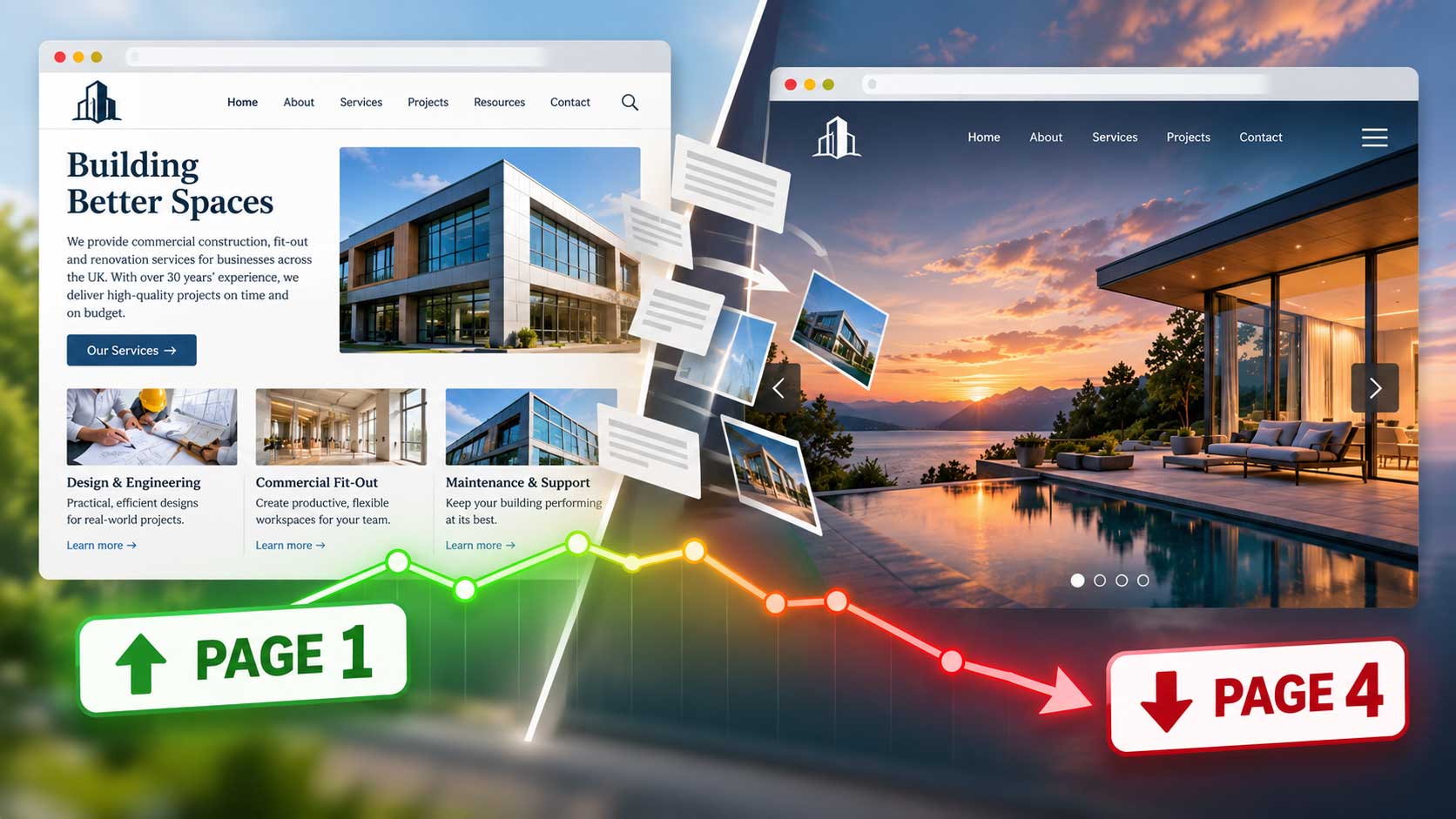
He was convinced that his customers didn’t read at all. So convinced, in fact, that he asked for all of the keyword-rich text on the homepage to be removed and replaced with a slideshow of the company’s achievements. He wanted the redesign immediately. “They will see what we do with photos,” he said.
So the text came out, and with it went the keywords and links that search engines relied on to understand the page. In its place went a full-width slideshow. To be fair, it was a pretty impressive slideshow.
But what happened next? Within a month, the website started slipping, and in about two months it had dropped from page one of Google to page four. Three full pages back, in no time at all. In his desire for a fashionable, minimal design, he had ignored the fact that search engines need content to rank a page.
Content is the value. The value of a website lies in its content. A plain, even boring-looking blog with relevant, well-written articles can reach page one faster, and attract more visitors, than a stylish design with thin or poorly written content. Style can support good content, but it can’t replace it.
When minimal works. Minimal design can work very well if your site already receives strong traffic from other sources, such as advertising, social media, a well-known brand, or a loyal email list. If you don’t have that kind of traffic, stripping out content to achieve a sleek look means trading your search visibility for style.
Text inside images. There’s a related trap. Designers sometimes place headlines and text directly into images, then use those images in a slideshow. They look great, but search engines can’t read text inside a picture the way they read real text on a page. Screen readers used by visually impaired visitors often can’t read it either. If the words matter, keep them as real text.
The lesson isn’t that slideshows are bad. It’s that every design decision has consequences, and some of them only show up in your traffic reports weeks later. In the next post, we’ll look at the hidden costs of homepage sliders.