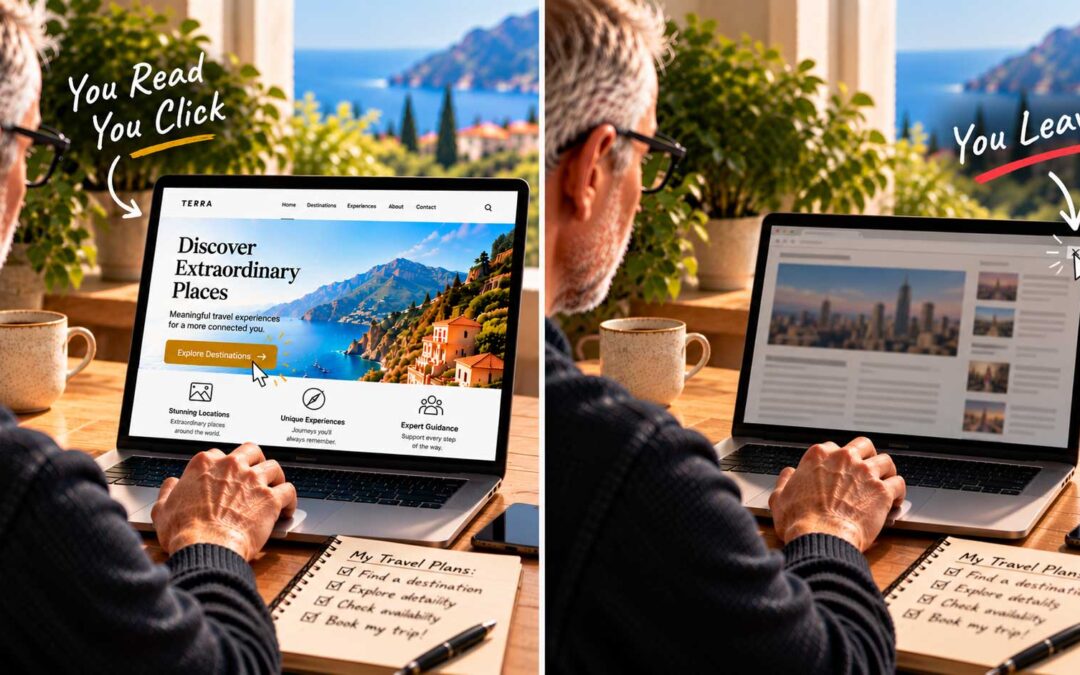
When researchers moved from newspapers to websites, they expected readers to behave the same way. They didn’t.
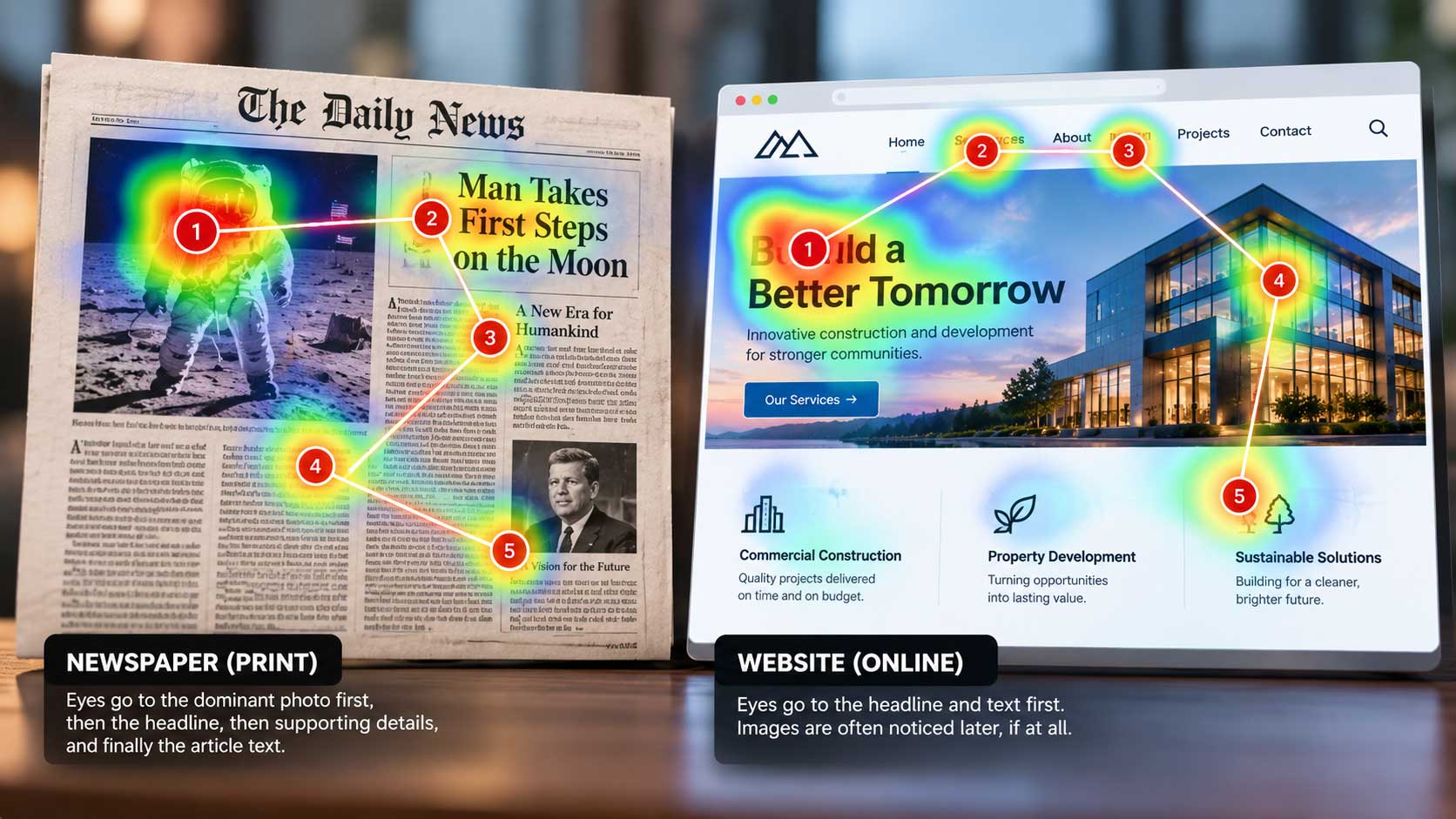
Headlines before photos. Poynter’s EyeTrack studies of online reading, beginning around 2000, found that many web readers were drawn first to dominant headlines rather than photos. That’s the reverse of what happened on paper. Readers also tended to move from left to right, and type size changed how they read: smaller type encouraged focused reading, while larger type encouraged scanning.
Usability expert Jakob Nielsen summarized the findings strikingly. Of readers’ first three eye movements on a page, only about a fifth landed on graphics; the rest went to text. People were drawn first to headlines, article summaries, and captions. Many didn’t look at the images at all until their second or third visit to a page.
What this means for your website. Images still matter enormously for mood, branding, and trust. But on the web, words often do the first and most important work. Your headline is likely the first thing a visitor actually reads, so it needs to be clear, specific, and relevant to what they’re looking for. A beautiful photo with a vague headline wastes the moment of greatest attention.
Heat maps you can use yourself. Eye-tracking used to require labs, special equipment, and weeks of analysis. Today, you can get a similar picture of your own visitors’ behavior with heat-map tools, many of them affordable or free, and some available as simple website plugins. Instead of tracking eyes directly, most track where visitors click, move their mouse, and stop scrolling.
Heat maps don’t lie. They show real visitor behavior on your actual pages. When I first set up heat maps on my own websites, the results astonished me. Sections I thought were important were barely noticed, and small details I’d overlooked were getting far more attention than expected.
Try it for yourself. If you’ve never looked at a heat map of your homepage, it’s one of the most eye-opening exercises you can do. Run one for a few weeks, then ask: Where are people looking? Where do they click? Where do they stop scrolling? The answers often reveal quick, practical improvements.
In the next post, we’ll look at the most famous pattern eye-tracking research uncovered: the F-pattern.